

Skip to content
Sign in

Post

Lithium Americas

Treasurer4.8 rating from 7 members637 ptsRate

Good Read

Why Wall Street banks have got it wrong on lithium

Sarah JonesMarkets Editor
Apr 5, 2024 – 11.44am
Save
 
Share


Gift this article


The market’s bearish forecast of a chronic oversupply of lithium is wrong, according to one major fund manager which expects an emerging deficit in the green metal.

Ethical Partners’ proprietary model suggests the global market for lithium is moving “rapidly back” into balance and could even be undersupplied – at odds with the view of major investment banks including Goldman Sachs and Citi.
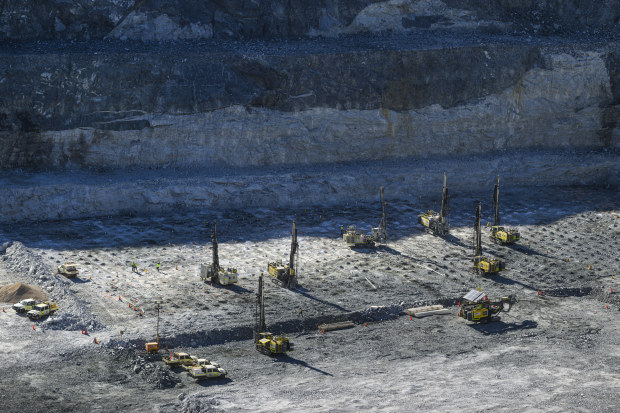
Pilbara Minerals’ lithium mine in Western Australia. The company has warned that a fall in lithium price means shareholders shouldn’t expect a dividend in the first half of the year. The New York Times

The price of battery metals collapsed last year – sending lithium down as much as 80 per cent from its peak – amid concerns of too much supply and weaker-than-expected demand for electric vehicles.

In turn, that has depressed the share prices of some of the largest miners in the sector, including Pilbara Minerals and Liontown Resources.

In the boom times, lithium carbonate rose from $US15,000 a tonne in 2021 to over $US80,000 a tonne as battery manufacturers rapidly stocked inventories to avoid even higher prices.


That brought more miners, and supplies, into the market, making some otherwise uneconomical projects profitable at those prices.

Ethical Partners’ data is based on company filings, including during the earnings season, where almost all Australian lithium miners adjusted their production outlooks, and multiple one-on-one meetings with the producers globally to hear “from the horse’s mouth” about plans to limit production and other cost-cutting measures.

“Since November, we believe the lithium market has moved from an 8 per cent surplus in 2024 to roughly in balance,” said Sam Cox, an analyst at Ethical Partners.

“While demand will still be a key driver of price direction from here, we see green shoots … The market has yet to identify this trend, and is still looking backwards.”

Of all the lithium producers they speak to, Ethical Partners owns just IGO because it’s the only company in the sector that meets their cash flow criteria. They have been topping up through the lithium rout.

Even so, the shares are still off some 19 per cent this year alone.


“From 2021 to 2023, lithium supply almost doubled,” Mr Cox said.

“We estimate a quarter of this supply came from sources not producing in 2020.”

But that dynamic, he said, had now corrected with balance sheets healthier, unprofitable projects mothballed and prices starting to recover. Lithium carbonate, for example, is up about 10 per cent year to date.

He added that much of the supply expected to hit the market this year and next came from China and Africa – which often didn’t materialise.

Unlike Australia, China has more lepidolite, a lower grade ore that can be turned into lithium but at a much higher cost.


Rebound dismissed

Even so, some of the largest brokers in the United States have dismissed the rebound in the lithium price as short-lived. Goldman Sachs in early March warned against misconstruing the recovery as marking the end of the bear market.

They predicted that the price of lithium carbonate would slump a further 25 per cent over the next 12 months because of the still significant pipeline of supply, which would hit the market just as demand for electric vehicles was downgraded.

Citi’s commodities team more recently suggested traders should be taking profits as the physical market tips into a large surplus over the coming 18 months.

According to Citi, while around 100,000 tonnes of output has been cut already, another 100,000 tonnes was still needed to be slashed to balance the market.

It added the current rally in lithium prices would only further delay the necessary supply cuts.


Further, the broker forecast that more than two million electric vehicles beyond their base case would need to be produced this year and in 2025 to clear the lithium market of excess supply – a scenario Citi said was “highly unlikely”.

EV demand ‘quite healthy’

But Ethical Partners’ fund manager Nathan Parkin said demand for electric vehicles was “quite healthy” and the “noise” about it weakening was coming from the US, when the vast majority of EVs were produced and sold in China, followed by Europe.

Mr Parkin said the same Wall Street banks were also servicing the hedge fund community which in Australia, at least, are aggressively betting against the sector.

Lithium producers are still among the most shorted stocks on the ASX. Pilbara Minerals, for example, still has more than 20 per cent of its shares held by short sellers.

“I’m being a bit cynical but part of the reason as to why they are bearish … is the fact that 20 per cent of Pilbara is short and the [banks] run massive trading business, which may feed into the view around where they stand on commodities,” said Mr Parkin.

“Our view is that the market is in deficit now.”


Join the conversation about Lithium Americas.

Reply

Replies

  1. Cornergrinders, it may just be on my copy but the right side of that article was chopped off.  If you would send it again and check to see that the entire article is posted it would be appreciated.  Lots of articles now available that essentially claim that the move toward alternative energy is a false pretense and that the "True Cost" of such a move are more than continuing to use fossil fuels.  I have no doubt that the same thing happened in th 1890's when livery stables and owners of 4 legged transportation protested that the "True Cost" of switching to internal combustion engine transportation was far in excess of maintaining hay burners that traveled at speeds that were  only a fraction of the speed of ICE transportation as roads were slowly developed and improved along with improvements in engine efficiency and better quality  gasolines. 

    "Dumping" on the new kid on the block is a game that has been popular for thousands of years when any new technology came on the market. 

    No doubt someone thousands of years proposed that the "True Cost" of using round wheels for wagon transport was way much more than using some sort of wheeless travois apparatus.  I can almost hear it now: 

    "Dragging supplies with a travoi has been around for centuries and has worked just fine.  Why go to all the effort and EXPENSE to add wheels to the cart when the TRUE COST of doing so will never compete with the far less expensive and more easily available arrangement of hooking two logs together and using branches as cross beams to make a dragging platform.  Well, duh!"

    There isn't much new under the sun as far as human resistance to technological advancement.  There is always resistance to new ideas and the rate of acceptance can be variable from fast to interminably slow depending on how long it takes to work out the bugs in the new technology.  As alternative energy solutions and energy storage solutions team up by both small and large improvements over time then the naysayers volume that is currently a loud cacophony will eventually be damped down to the single digit decibel level and become below the threshold for hearing by the human ear.  It won't happen overnight, but it will happen because those small and large improvements in the new technology of alternative energy and energy storage continue to be made simultanously as the advocates of the travois keep bleating against the advocacy of the wheel.

    One recent "Opinion piece" illustrates the advocacy of the travoi group quite vividly:

    https://www.msn.com/en-us/money/companies/trillions-in-taxpayer-subsidies-haven-t-made-wind-and-solar-power-cheaper-or-better-for-americans/ar-BB1llpmd?ocid=hpmsn&cvid=aa9fdc3fbfc147d6b266588d0c14db8d&ei=72

    His basic attack is on the high cost of energy storage that must be part of any alternative energy solution according to his argument.  This is an "all or nothing" sort of approach that suggests that either fossil fuels can be used OR wind and solar can be used for energy production but not both.  One has to choose.  This type of false reasoning denies that one can easily use both according to the advantages of both in order to come up with a hybrid solution as a bridge for the present time until alternative energy and storage solutions have sufficiently advanced sometime in the future to become a true dominant solution, not necessarily exclusive to fossil fuel use, but occupying the catbirds seat nonetheless. 

    Obsitinate insistance that "It is my way or the highway" positions aren't unique to those chained to fossil fuels as the true path to energy utilization.  There are plenty of alternative fuel advocates who do the same thing:  "My way or the highway" and they are just as blind to the reality of the situation as those fossil fuel advocates who would have advocated for the travois over the wheel tens of thousands of years ago had they lived in that epoch.

    The author of the article that ridicules taxpayer subsidies ignores all of the fundamental improvements in efficiency that have come in the development of more and more efficient and lower cost wind, solar, wave and geothermal basic science as applied to generating alternative energy AND in developing increasingly better and more novel ways to store that energy.  He would nail us to the cross of fossil fuels for the next thousand years if possible and ten thousand years ago he would have tried to do the same as the leader of the Anti-Wheel forces while he spent all of his effort regurgitating the same old "True Cost" tirade against the wheel that in the present moment where he now resides he spits out his "True Cost" false argument ad nausem against wind, solar, wave and geothermal energy along with energy storage.

    One gaping hole in his presentation is in regards to the waste of spent solar panels, batteries and the blades of wind generators.  Remarkable headway has already been achieved in the field of recyling these instruments of change and the significant improvements already achieved are not static since recycling technology for all aspects of alternative energy and energy storage will continue to have major improvements in the future.  Alternative energy and energy storage are concepts that will do nothing but get better and better as time move forward.

    In the meantime while progress moves forward the advocates of the travois, like the author of the hit piece above against altternative energy and energy storage, will continue to have his feet remain fixed in cement and bleat out his pathetic "True Cost" pontifications.

    JMO

    Okiedo