Wait out turn
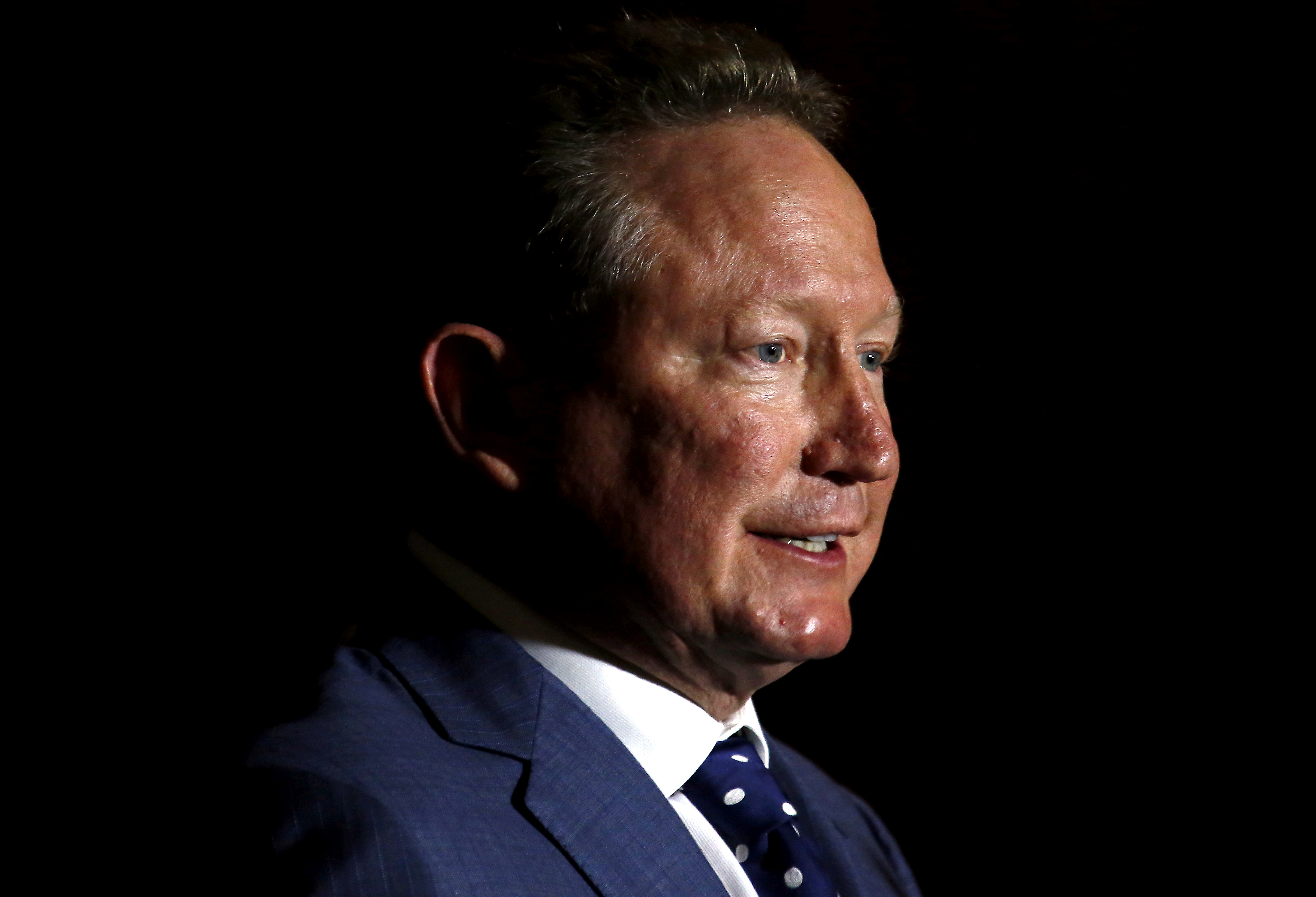
Forrest is very busy. Hydrogen for the UK has been taking up his time and energy. I expect we will get our turn for news when he is ready. To change the world it takes one step at a time. First Hydrogen and then get busy working on the metals needed for hydrogen production and planet greening.
I believe he is truly on a mission to green up his portfolio.
=======================================================
Fortescue Future Industries signs agreement with JCB and Ryze Hydrogen to become United Kingdom’s largest supplier of green, renewable hydrogen

Fortescue Future Industries (FFI) will become the largest supplier of green hydrogen (GH2) to the United Kingdom after signing a multi-billion-pound deal with construction giant J C Bamford Excavators (JCB) and Ryze Hydrogen (Ryze).
Under a memorandum of understanding signed today prior to the climate conference, COP26, JCB and Ryze will purchase 10 per cent of FFI’s global green hydrogen production.
FFI’s green hydrogen production is anticipated to grow to 15 million tonnes of GH2 per year by 2030, accelerating to 50 million tonnes per year in the next decade thereafter.
Under the partnership, FFI will lead the green hydrogen production and logistics to the UK market, and JCB and Ryze will manage green hydrogen distribution and development of customer demand in the UK.
FFI Chairman, Dr Andrew Forrest AO, said, “This landmark, first of its kind partnership will help the UK to achieve Net Zero, particularly in the hard to electrify sectors.
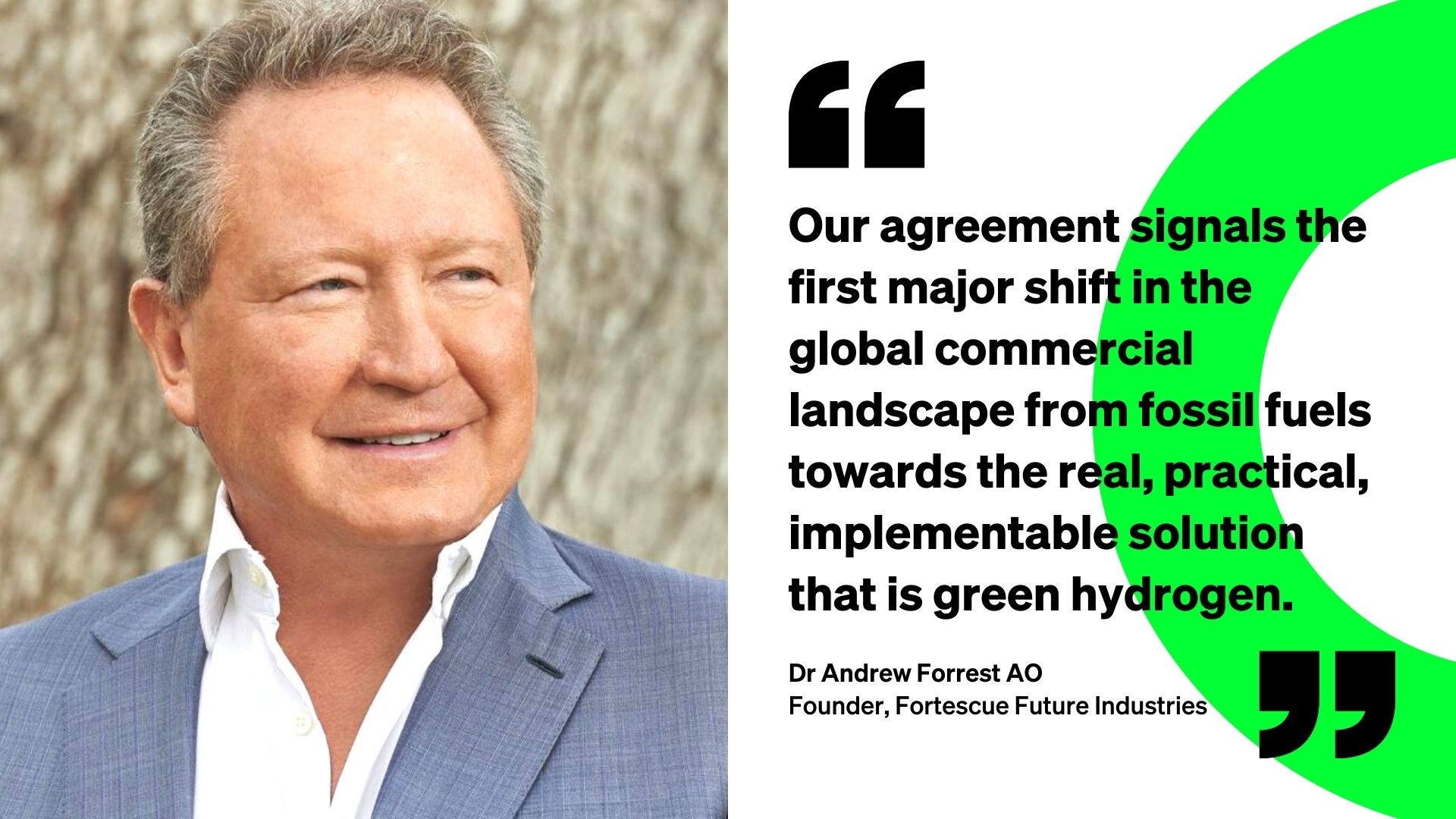
“Our agreement signals the first major shift in the global commercial landscape from fossil fuels towards the real, practical, implementable solution that is green hydrogen. We are delighted to announce this groundbreaking initiative at the critical climate forum of COP26.
“The reduction in greenhouse gas emissions associated with replacing fossil fuel with only two million tonnes of green hydrogen is the equivalent of taking over 8 million cars off the road – almost a quarter of the UK’s entire fleet,” Dr Forrest said.
The agreement has been strongly backed by JCB, which called it “a major advance.”
JCB Chairman Lord Bamford added: “This is an important step towards getting green hydrogen to the customer. It’s fine having an engine powered by green hydrogen, but no good if customers can’t get green hydrogen to fuel their machines. This is a major advance on the road towards making green hydrogen a viable solution.”
Jo Bamford, widely regarded as the UK’s green hydrogen champion, is the founder of Ryze and owner of Wrightbus. Ryze is building the UK’s first network of green hydrogen production plants, while Wrightbus built the world’s first hydrogen double decker.
Mr Bamford commented, “This is a monumental deal, not just for us but for the UK as a whole. We have chosen to partner with the global leaders in green hydrogen and it is fabulous that two countries, the UK and Australia, can come together to create a brighter future.
“We are walking the walk on green hydrogen and now we want the Government to show its commitment to the sector by investing in buses, trains, trucks, ships, aircraft and the entire green hydrogen supply chain.
“At best, any hydrogen made from fossil fuel is being promoted as a transition fuel, but the production of it causes more pollution than it saves. This agreement demonstrates that green hydrogen does not need to be ‘transitioned’ via fossil fuel hydrogen. Production of it can commence at once, to meet the needs of all mobility. I have asked Andrew to deliver to me immediately that he has the capacity, and he has agreed,” Mr Bamford said.
An extended offtake agreement will also be evaluated to provide green hydrogen to the European market, and the parties have agreed to evaluate collaboration opportunities to accelerate green hydrogen demand and establish green hydrogen and green industry manufacturing centres.
FFI Chief Executive Officer Julie Shuttleworth AM said, “This deal reinforces the inexorable march of green hydrogen as the fuel of the future.
“Green hydrogen is critical for the planet and good for business, a powerful fuel and ingredient in the manufacturing of a large range of industrial, difficult-to-decarbonise products. It will be fundamental in enabling the decarbonization of heavy industry globally,” Ms Shuttleworth said.
Fortescue Future Industries signs agreement with JCB and Ryze Hydrogen to become United Kingdom’s largest supplier of green, renewable hydrogen
Fortescue Future Industries (FFI) will become the largest supplier of green hydrogen (GH2) to the United Kingdom after signing a multi-billion-pound deal with construction giant J C Bamford Excavators (JCB) and Ryze Hydrogen (Ryze).
Under a memorandum of understanding signed today prior to the climate conference, COP26, JCB and Ryze will purchase 10 per cent of FFI’s global green hydrogen production.
FFI’s green hydrogen production is anticipated to grow to 15 million tonnes of GH2 per year by 2030, accelerating to 50 million tonnes per year in the next decade thereafter.
Under the partnership, FFI will lead the green hydrogen production and logistics to the UK market, and JCB and Ryze will manage green hydrogen distribution and development of customer demand in the UK.
FFI Chairman, Dr Andrew Forrest AO, said, “This landmark, first of its kind partnership will help the UK to achieve Net Zero, particularly in the hard to electrify sectors.
“Our agreement signals the first major shift in the global commercial landscape from fossil fuels towards the real, practical, implementable solution that is green hydrogen. We are delighted to announce this groundbreaking initiative at the critical climate forum of COP26.
“The reduction in greenhouse gas emissions associated with replacing fossil fuel with only two million tonnes of green hydrogen is the equivalent of taking over 8 million cars off the road – almost a quarter of the UK’s entire fleet,” Dr Forrest said.
The agreement has been strongly backed by JCB, which called it “a major advance.”
JCB Chairman Lord Bamford added: “This is an important step towards getting green hydrogen to the customer. It’s fine having an engine powered by green hydrogen, but no good if customers can’t get green hydrogen to fuel their machines. This is a major advance on the road towards making green hydrogen a viable solution.”
Jo Bamford, widely regarded as the UK’s green hydrogen champion, is the founder of Ryze and owner of Wrightbus. Ryze is building the UK’s first network of green hydrogen production plants, while Wrightbus built the world’s first hydrogen double decker.
Mr Bamford commented, “This is a monumental deal, not just for us but for the UK as a whole. We have chosen to partner with the global leaders in green hydrogen and it is fabulous that two countries, the UK and Australia, can come together to create a brighter future.
“We are walking the walk on green hydrogen and now we want the Government to show its commitment to the sector by investing in buses, trains, trucks, ships, aircraft and the entire green hydrogen supply chain.
“At best, any hydrogen made from fossil fuel is being promoted as a transition fuel, but the production of it causes more pollution than it saves. This agreement demonstrates that green hydrogen does not need to be ‘transitioned’ via fossil fuel hydrogen. Production of it can commence at once, to meet the needs of all mobility. I have asked Andrew to deliver to me immediately that he has the capacity, and he has agreed,” Mr Bamford said.
An extended offtake agreement will also be evaluated to provide green hydrogen to the European market, and the parties have agreed to evaluate collaboration opportunities to accelerate green hydrogen demand and establish green hydrogen and green industry manufacturing centres.
FFI Chief Executive Officer Julie Shuttleworth AM said, “This deal reinforces the inexorable march of green hydrogen as the fuel of the future.
“Green hydrogen is critical for the planet and good for business, a powerful fuel and ingredient in the manufacturing of a large range of industrial, difficult-to-decarbonise products. It will be fundamental in enabling the decarbonization of heavy industry globally,” Ms Shuttleworth said.
Join the conversation about Noront Resources.
Reply