Issued on behalf of Zefiro Methane Corp. Disclosure
Zefiro Methane Subsidiary Generates First Revenue from Radial Casing Solutions' Patented REED Casing Expansion Technology
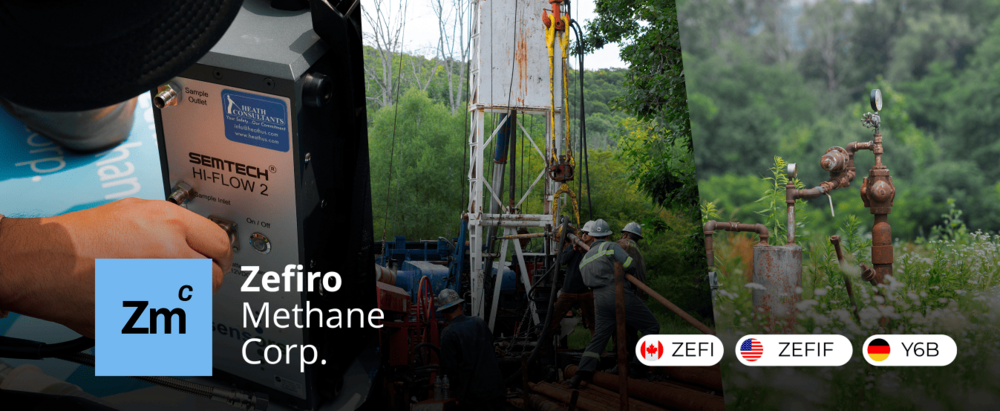
Zefiro Methane Corp. (Cboe Canada: ZEFI; OTCQB: ZEFIF; Frankfurt: Y6B) has realized its first-ever revenue from licensing patented wellbore technology, following two successful commercial deployments of the Radial Elastomer Expansion Device (REED) — a casing expansion tool — by corporate clients in Pennsylvania. The deployments mark a new revenue stream for Zefiro's subsidiary Plants & Goodwin, Inc. (P&G), which holds an exclusive U.S. patent license for REED and can now market the technology to additional end-user licensees across the United States.
AGORACOM Feature Article Issued On Behalf of Zefiro Methane Corp.
April 21, 2026
Background / Context
Zefiro Methane Corp. operates as a U.S. environmental services company focused on methane abatement from oil and gas wells. The company's integrated operations include plugging orphaned and marginal wells, measuring methane emissions, and originating carbon credits from remediated sites.
This announcement relates to Zefiro's Orphaned Well Plugging & Methane Abatement pillar, where P&G executes field operations. P&G is a third-generation plug-and-abandonment contractor operating in the Appalachian Basin since 1970, with capabilities spanning rig services, cementing, wireline work, and full-service project management.
The context for this update is significant: over the past two fiscal quarters combined, P&G's core operations were largely responsible for generating more than USD $22 million in revenue and adjusted EBITDA of USD $3.8 million. These core operations now have a complementary technology licensing revenue stream through REED.
In August 2024, P&G acquired a minority ownership interest in Radial Casing Solutions Ltd. (RCS) — then operating as Winterhawk Well Abandonment Ltd. — a Calgary, Alberta-based manufacturer of specialized downhole tools. Concurrent with that investment, P&G entered into an exclusive patent license agreement for RCS' U.S. patents, positioning P&G as the only company authorized to use, deploy, distribute, or sublicense RCS innovations such as REED within the United States.
Details of the Announcement
Technology Overview: What is REED?
The Radial Elastomer Expansion Device (REED) is a patented technology that uses surface-level hydraulic pressure to expand elastomer elements — flexible rubber-like seals — on the inside of wellbore casing to seal leak pathways.
In practical terms: casing is the steel pipe installed inside a wellbore to maintain structural integrity and prevent fluids from migrating between underground formations and the surface. Over time, this casing can develop gaps or failures that allow gases such as methane to escape upward — a condition known as sustained casing pressure or surface casing vent flow (unwanted gas migration to the surface through casing annuluses, the spaces between nested pipes).
REED addresses this problem by expanding the casing from the inside, pressing elastomer elements outward to create a tight seal that blocks these leak pathways. This can be done proactively during well plugging operations to prevent future issues, or reactively to remediate existing leaks without the need for extensive re-work.
First Commercial Deployments and Revenue Generation
Key details from the announcement:
- Two corporate clients in the resources sector retained P&G to deploy REED on job sites in Pennsylvania.
- These deployments represent Zefiro's first-ever earnings from intellectual property licensing — a new revenue stream distinct from P&G's traditional plug-and-abandonment service fees.
- The successful completion of these projects with third-party clients establishes proof of concept for REED in commercial field conditions and provides P&G with case studies to support marketing efforts.
- As the exclusive U.S. patent license holder for REED and other RCS technologies, P&G can now sublicense the technology to additional end-user operators across the United States, creating potential for recurring licensing revenue.
Commercial Value Proposition
According to management commentary in the press release, the economic advantage of REED is substantial:
- When sustained casing pressure or surface casing vent flows occur at a wellbore, remediation costs can range from hundreds of thousands to millions of U.S. dollars.
- Deploying REED to expand wellbore casing and seal leak pathways costs a fraction of that amount.
- By including REED in P&G's "modular, turnkey plug-and-abandonment package," the company can offer clients a proactive solution that reduces the risk of costly post-plugging remediation work.
Expanded Technology Portfolio
The exclusive patent license agreement with RCS extends beyond REED to include other patented innovations developed by RCS. This portfolio of advanced intellectual property positions Zefiro to offer differentiated technical capabilities in the North American plug-and-abandonment market.
Management described Zefiro as "the leading plug-and-abandonment business in North America" and cited this intellectual property portfolio as a source of competitive advantage.
Strategic Significance
For investors, this announcement introduces several important business dynamics:
1. New Revenue Stream from Intellectual Property
Historically, P&G's revenue has come from performing plug-and-abandonment services — physical field work compensated on a project basis. The REED deployments represent the company's first revenue from licensing patented technology. This creates a potentially scalable revenue stream that is less capital-intensive than rig-based field operations.
While the financial magnitude of these initial deployments was not disclosed, the exclusivity of P&G's U.S. patent license means any commercial use of REED in the United States must flow through P&G, either as a direct service or as a sublicense to third parties.
2. Sublicensing Potential
The exclusive patent license agreement grants P&G the right to sublicense REED and other RCS technologies to other entities operating in the United States. This means P&G can generate revenue by allowing other contractors, operators, or service companies to use the technology under license — without P&G necessarily performing the physical deployment.
This model could enable geographic and operational scale beyond P&G's direct field capacity, as sublicensees deploy REED on projects where P&G's rigs are not engaged.
3. Differentiated Service Offering
By incorporating REED into its standard plug-and-abandonment service package, P&G can differentiate its offerings from competitors. The ability to proactively prevent sustained casing pressure and surface casing vent flows adds value for clients and may provide pricing leverage or win rate advantages in competitive bid processes — particularly on government-funded contracts where technical specifications and performance guarantees are closely evaluated.
4. Alignment with Methane Abatement Strategy
Surface casing vent flows and sustained casing pressure represent sources of fugitive methane emissions from oil and gas wells. By sealing these leak pathways, REED supports Zefiro's broader methane abatement mission and could enhance the environmental integrity of wells that the company plugs for carbon credit origination.
This alignment between technology deployment and emissions reduction strengthens Zefiro's positioning as an integrated methane abatement platform.
5. Proof of Concept with Third-Party Clients
The fact that two independent corporate clients in the resources sector selected P&G to deploy REED — and that both deployments were described as "proven and successful" — provides third-party validation of the technology's commercial viability. This creates a foundation for marketing REED to additional clients and potential sublicensees.
Leadership Quote
Zefiro Senior Vice President of Corporate Development Luke Plants stated:
"We are quite happy to have executed these deployments and further advanced our playbook for making the most out of RCS' technologies, for which we hold an exclusive license of their U.S. patents. Gas often comes to the surface of wellbores from sustained casing pressure or surface casing vent flows. When this happens, the cost to remediate the issue can be in the hundreds of thousands to millions of U.S. dollars - whereas using the REED device to expand the wellbore casing costs a mere fraction of this amount. We now include REED in P&G's modular, turnkey plug-and-abandonment package, and by beginning to more widely license the technology, we can offer this capability to other operators across the United States."
Challenges & Next Steps
While the initial REED deployments represent commercial validation, several considerations remain for investors monitoring the technology's market adoption:
Market Awareness and Education
REED addresses a technical problem — sustained casing pressure and surface casing vent flows — that may not be top-of-mind for all well operators until it occurs. Building market awareness of REED as a proactive solution will require education and case study dissemination. The pace at which P&G can establish REED as a standard specification in plug-and-abandonment contracts will influence revenue growth from this technology.
Sublicensing Execution
While P&G now has the right to sublicense REED to third parties, the terms of those sublicense agreements — including pricing structures, geographic territories, and performance obligations — have not been disclosed. Successfully structuring and executing sublicense deals that balance market penetration with revenue capture will be important for maximizing the value of the exclusive patent license.
Operational Integration
Incorporating REED into P&G's standard plug-and-abandonment workflow requires training, equipment procurement, and process refinement. As deployment volumes increase, operational efficiency and quality control will need to scale accordingly.
Competitive Response
Alternative technologies and methods for addressing sustained casing pressure and surface casing vent flows exist in the market. Operators may choose competing solutions based on cost, familiarity, or technical specifications. REED's market share will depend on performance advantages, cost competitiveness, and P&G's ability to demonstrate value through case studies and field results.
Near term, investors can watch for:
- Additional announcements of REED deployments with new clients or in new geographic markets
- Disclosure of sublicensing agreements with third-party operators or contractors
- Quantification of revenue contributions from REED licensing in future financial reporting
- Expanded case studies or technical data demonstrating REED's performance and cost savings
- Integration of REED into major government-funded plug-and-abandonment contracts where P&G serves as prime contractor
Conclusion
The successful deployment of REED by two corporate clients in Pennsylvania marks an important milestone for Zefiro Methane Corp.: the company's first-ever revenue from licensing patented technology. This new revenue stream complements P&G's core plug-and-abandonment operations, which generated more than USD $22 million in revenue over the past two fiscal quarters combined, according to management's reference to recent operational performance.
For shareholders, the REED announcement illustrates Zefiro's strategy of building a differentiated methane abatement platform that extends beyond traditional field services to include proprietary technology licensing. With exclusive rights to RCS' U.S. patents and the ability to sublicense REED to third parties, P&G has positioned itself as the sole gateway for this casing expansion technology in the United States — a potentially significant advantage in a plug-and-abandonment market being driven by billions of dollars in federal Infrastructure Investment and Jobs Act funding.
The combination of proven field deployments, third-party client validation, and sublicensing optionality provides a foundation for REED to become a recurring element of Zefiro's business model as the company continues executing its methane abatement and well remediation strategy across multiple U.S. states.
About Zefiro Methane Corp.
Zefiro is a U.S. environmental services company focused on strategically addressing methane emissions. Its fully integrated core operations include plugging oil/gas wells and measuring methane leaks. In 2025, Zefiro became the first-ever project developer to sell carbon credits originated under the ACR's orphan well methodology. Zefiro is also leveraging its team's expertise to develop a portfolio of proprietary environmental technologies, which can be commercialized at a global scale.
For more information about Zefiro, please visit the company's website at https://www.zefiromethane.com/ and Follow Zefiro on LinkedIn.
Disclaimer
Zefiro Methane Corp. Is A Client Of AGORA Internet Relations Corp. https://agoracom.com/ir/Agoracomupdates/forums/discussion/topics/796135-DISCLAIMER-AND-DISCLOSURE/messages/2399000
This Press Release Article was created using AGORACOM proprietary AI Content Agents. You can learn more about AI Content Agents and their capabilities at https://agoracom.com/artificial-intelligence
AGORACOM AI Content Agents are prone to potential errors so you therefore should not rely on this article to make any investment decisions before consulting your qualified financial advisor AND proceeding to READ THE FULL ZEFIRO METHANE CORP. PRESS RELEASE AT: https://www.zefiromethane.com/news/
Join the conversation about Zefiro Methane Corp.
Reply