


Interesting article
Chinese M&A: Watch out for Las Bambas effect
It's beginning to look as if Chinese authorities carefully engineered the takeover of Glencore's flagship Las Bambas copper project over two years.
Glencore and Xstrata first announced a merger February 2012 and after much shareholder wrangling and jumping through regulatory hoops China was the last country to approve the deal – a full 14 months later.
There was one, pretty specific, proviso.
Glencore must give up Las Bambas. Or something of equivalent significance for future global copper supply (nothing springs to mind).
The Swiss-based firm had already lavished $4 billion on the Peruvian mine and China took its sweet time to ink a deal.
Order 9 scraps the approval process for deals worth less than $1 billion entirely
While negotiations of the sale dragged on for another year Las Bambas was being thoroughly de-risked and readied for production by one of the more experienced teams in the global copper mining game.

John Gravelle: PwC Global Mining Leader
At the same time the copper price was sliding to a near four-year low, strengthening China's hand in the final month of talks before the consortium led by Minmetals finally came to a $6 billion agreement.
Both sides walked away satisfied, at least according to Glencore CEO Ivan Glasenberg.
Las Bambas is set to enter production next year and at 400,000 tonnes of copper as well as significant amounts of silver and gold. (Compared to the likes of a Conga or Oyu Tolgoi, Las Bambas appears to have been smooth-sailing.)
John Gravelle, PwC partner and global mining leader says the Chinese takeover of Las Bambas is a sign of things to come.
Companies further down the scale will also be impacted by the the "Las Bambas effect", Gravelle told MINING.com in Vancouver at the presentation of the consulting firm's 2014 global trends report.
"The size of the deal reflects Chinese belief in copper. And China's smaller and private mining operations take their guidance from the large state-owned enterprises," said Gravelle.
The National Development and Reform Commission, China's powerful economic planning agency, in May put into effect a new regime to govern overseas investment, making it much easier for domestic companies to make acquisitions and set up joint ventures abroad.
The so-called Order 9 scraps the approval process for deals worth less than $1 billion entirely, replacing it with a simple registration process, eases forex requirements and cuts out much of the bureaucracy.
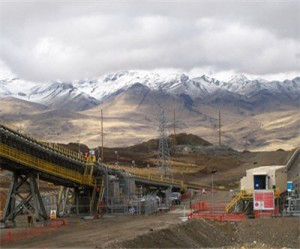
Work continues at Las Bambas. Source: Siemens
Centrally-managed state-owned enterprises can make deals of $300 million or less without gaining prior approval, transactions which previously also required the say-so of the commerce ministry and the state forex administration, often at provincial and central government level.
While the new regulations appeared to go largely unnoticed outside the legal fraternity it could open up – maybe not the floodgates – but a steady stream of new deals.
Chinese companies also appear more willing to engage in unfriendly takeovers
Only one of the 98 outbound deals made by Chinese companies during the first half of 2013 exceeded $1 billion and that was the blockbuster takeover of Canada's Nexen by state energy company CNOOC.
Gravelle said the move could "convince firms waiting for the right opportunities (and for lower valuations) that now is the right time" to enter foreign M&A markets.
Another way the country's strategy towards overseas acquisitions is changing is the increasing use of partnerships, says Gravelle, adding that Chinese companies also appear more willing to engage in unfriendly takeovers.
Last month Baosteel teamed up with Australia's Aurizon for a joint and hostile bid for iron ore developer Aquila (while copper appears to be the metal du jour iron ore remains a Chinese obsession).
The change in Beijing's outbound strategy is also evident in Minmetals' decisions to do the Las Bambas deal through its Australian arm, MMG, which will "transform" the Melbourne-based company.
Last week China National Gold's President Xin Song during a visit to Vancouver said the Beijing-based firm is actively on the hunt for global acquisitions and partnerships in gold, silver and copper.
Song said China National, the world largest gold miner by some stretch, will first explore regional opportunities but projects on other continents and established firms in developed economies are also attractive.
A view of the world and a strategy to extend influence that befits a country that calls itself the Middle Kingdom is beginning to take shape.
http://www.mining.com/copper-ma-watch-out-for-las-bambas-effect-78850/?utm_source=digest-en-mining-140629&utm_medium=email&utm_campaign=digest
Join the conversation about St. Elias Mines.
Reply