Skip to content
Sign in

Post

Crystallex International

You’re reading bmh’s reply in this thread.Jump to it

Prez4.0 rating from 155 members15.7K ptsRate

Mineweb article...

GOLD NEWS

PRODUCTION ON TARGET

Big increase in Q2 gold output and fall in costs for Rusoro

Russian-owned and controlled, but Canadian quoted, Venezuelan gold miner Rusoro reports strong progress on its gold mining and exploration operations

Author: Lawrence Williams
Posted: Tuesday , 25 Aug 2009

LONDON -

Controversial Venezuelan gold miner, Rusoro Mining, has reported good Q2 operating results with a sharp increase in gold production, and a big fall in costs, compared with a year earlier and is well on target to its predicted 170,000 - 190,000 gold ounces this year. It is very much the success story in Venezuelan gold mining, while most other foreign companies working there have run into major problems leading them to sell out to Rusoro, or hang on in the hope a change in political leadership (seen as unlikely at present) will lead to a reversal of the stumbling blocks being put in their way.

Why controversial? Rusoro is basically a Russian run, and part-owned, junior gold miner, rapidly moving towards mid-tier status. The management is in the hands of the Agapov family, which controls around 16.5%, but South Africa's Gold Fields owns 28% resulting from the sale of its Choco 10 mine, Rusoro's main producing asset at the moment, but which is taking a passive role in management. The company sprang from virtually nowhere in 2007 with the flotation of Rusoro in Toronto out of the Agapov family company, Grupo Agapov. The Agapovs had previously been active in Venezuela for five years and had built up strong local connections.

Rusoro's strength has lain in its ties with the Chavez government in Venezuela where Russian ownership is seen as a positive, while North America and other western countries seem to drum up negative vibes. Gold Fields was one of the first to recognise that perhaps it would continue to face difficulties operating there, hence the transfer of ownership of Choco 10 to Rusoro. Hecla of the U.S. also found operating in Venezuela under the current political regime extremely difficult and ended up cutting its losses and selling its Isidora and La Camorra operations to a Rusoro run jv with a stae mining company..

The jewels in the crown of the highly prospective Venezuelan gold belt though remain Crystallex' Las Cristinas deposit and Gold Reserve's Las Brisas project, both major gold deposits in their own right, but with so many difficulties being put in their way by the Venezuelan government through withdrawals of permits, and delays in granting environmental clearances, and pressure being put on them to also sell to Rusoro, these may not be able to hold out a great deal longer, although neither is prepared to give up without a struggle. International arbitration may be a likely step here and major court action. Earlier this year Rusoro proposed a merger with Gold Reserve, but this foundered on largely on legal grounds and strong opposition from U.S. headquartered Gold Reserve.

But, returning to Rusoro, the company has been able to take advantage of the political difficulties being put in the way of other operating and would-be gold miners - difficulties that sometimes appear to have been stage-managed by Venezuelan government interests. The company has the two operating mines and ten exploration projects (including development and exploration around the mines) which range from early stage to advanced/development stage gold projects. Choco 10 and Isidora produced 100,000 ounces and 11,000 ounces of gold in 2008, respectively, through the Choco 10 Mill. Rusoro owns and operates the Choco mill facility and has a 95% ownership in the Choco 10 Mine. Production from the Isidora Mine is subject to a 50/50 joint venture with the Venezualan government . The Choco 10 operations are currently the subject of studies which are evaluating the possibility of a significant staged expansion to more than double production from the region.

Overall the Company has a significant land position in all of the major gold mining districts in Bolivar State, Venezuela. The region boasts first class geology and gold potential within an identical setting to some of the world's largest mining districts including Ashanti in West Africa and Kirkland Lake in Canada. Rusoro has developed and accumulated resources of more than 7.0 million ounces of gold in the measured and indicated category and more than 7.0 million ounces in the inferred category. The company continues to have multiple drill rigs active on its projects throughout 2009. The drilling is designed to expand and upgrade Rusoro's current resources and 43-101 compliant resource updates will be released through the year.

The real target for Rusoro and the Venezuelan government though is likely to be the Las Cristinas property on Venezuela's fabled kilometre 88, thought to be Latin America's biggest gold deposit, and currently controlled by Canada's Crystallex. This has proved to be an ill-fated gold deposit and should probably one-day be the subject of a major novel or feature film. Crystallex itself inherited the project in controversial circumstances, but prior to that the history is intriguing.

Apparently the concession was given to the co-pilot of the plane which discovered the Angel Falls by a grateful Venezuelan government in the 1930s. In the 1980s the pilot's widow, Dot Lemon, who lived in the U.S. was almost certainly swindled out of her inheritance in some sharp legal and financial practices and some believe she cursed the mine's future owners on her deathbed as virtually every company involved with it since has run into huge financial, political or legal difficulties over it ever since.

The Chavez government has been making life as difficult as possible for Crystallex, perhaps in the hope the Toronto-based company will eventually give up and go away, but this seems unlikely given that it is thought to be sitting on billions of dollars in gold!

During the second quarter, Rusoro's 95%-owned Choco Mine produced 40,739 ounces of gold at a cash cost per ounce sold of $313 as compared to 25,062 ounces and a cash cost of $652 per ounce sold, reported in Q2, 2008. Cash costs were less than forecast due mainly to lower overall costs and a much higher grade of ore processed, as well as enhanced recoveries due to the installation of a new kiln and carbon recovery system. The Company's guidance for 2009 remains at 135,000 ounces of gold production at the Choco Mine operations, while the cash cost per ounce guidance for 2009 has been reduced to $375 per oz Au.

The 50% owned Isidora Mine produced 7,784 ounces (net to the Rusoro) at a cash cost per ounce sold of $369. The Company continues to forecast 70,000 ounces of gold production at Isidora for 2009 (35,000 net to the Company) with an adjusted cash cost guidance of $350 per ounce, up from the originally forecast $290 due to an increase in the payroll costs at the mine site as a result of a new union agreement and increases in social and community costs during the first half of the year.

http://www.mineweb.co.za/mineweb/view/mineweb/en/page34?oid=88024&sn=Detail

Join the conversation about Crystallex International.

Reply

Replies

    1. Looks like Rusoro isn't getting any preferential treatment. I remember Agapov or the other guy in Rusoro saying they didn't have a problem with the amount allowed for export. Looks to me like it's hurting them too. It will be interesting. I have a feeling that part of our hold up might be that Agapov is not happy about the difficulty with exporting, and is working on getting some changes to the law......I keep forgetting about that law,,,,selling, what, 60 or 70 % to Venezuela if they want it? At the official rate? That may very well be a sticking point....Lotta bucks were talking about in the difference between official rate and black market rate.

      P

      1. That's just on the books/paper. The way things operate down there with the corruption in the Russian and Vz ststems of operation and conduct, how much gold does one think has left the country unaccounted for, more ore less than 6 million? They may not give a crap about the 6 million loss, great money can and is made "other ways". jmo

      2. With the official rate of 2.15 bolivars to the US$, and the black market rate of 7 to the USD, miners are effectively selling 70% of their production @ 30% of the world price.

        If the world market price of gold is $950 an ounce then the Ven Central bank pays 2,042 bolivars when the "real" world price in bolivars is 6,650. Most, if not all of your local expenses are paid in bolivars but without access to currency at the official rate all imports are going to be paid for in US$ bought at the "unofficial" rate of 6.5 to 7 to the dollar. When 70% of your output is sold for $285 an ounce, well under the cost of production, it's hard to make a profit on the remaining 30% which you still can't sell at the world price without an export license!

        I'll bet that getting an export licence to sell gold is just as hard as getting a mining permit, and with a few palms to be greased in the process..

      3. ""I have a feeling that part of our hold up might be that Agapov is not happy about the difficulty with exporting, and is working on getting some changes to the law.....""

        Why would this hold us up???

        EZ

        1. EZ....It could be one of the sticking points that Agapov/Venrus, ( if indeed that is who will be mining Las Cristinas ), wants to have dealt with before he will agree to spend billions on acguiring KRY, by whatever means. Not being able to export the gold so it can be sold at the world price is, as has been pointed out, is a big barrier to making the profits one should.

          Pend

          1. Penderite

            The charade of Venezuela and the permits is a political one, as you know well. The Hugo regime has no intention of providing any permits period. KRY's options at obtaining value are limited:

            - arbitration (funds needed and Note Holder(s) legal action)

            - some form of JV with a 3rd party

            - sale or merger

            The most likely outcome, in my opinion, is a sale or merger.

            To that end I believe management is working behind the scenes to accomplish that goal. Time and money are running out. The chance of another entity offering cash is slim - any sale would be a stock swap (eg. 3 or 4 RML per 1 KRY)

            Cheers

            Teutracker

            1. Replying to @Teutracker

              (3 or 4 RML per 1 KRY) I dont think that would come close to the value of north of 2 billion that was discussed at the last meeting. I think arbitration would be more likely.

            2. Replying to @Teutracker

              ""The chance of another entity offering cash is slim - any sale would be a stock swap (eg. 3 or 4 RML per 1 KRY)""

              I wouldn't take a deal like that, so I'm certain Fung would get a good laugh out of it. Fung has already told everybody who cares what his minimum acceptable price level is. That minimum is 2 billion +, what you are taking about is something in the neighborhood of 1/2 a billion. That would barely cover what we've invested in Ven. and would give us virtually nothing for our contract.

              Na, that's not gonna cut it. Fung is a much better businessman than that. I'd rather burn my shares than accept a feeble deal like that.

              I'll expect Fung to generate at least $6.00/share minimum, no matter how he does it, with arbitration probably bringing considerably more and probably worth the wait.

              EZ

              1. Replying to @EZ Street

                EZ

                I had spoken to Bob this morning and the sense I get is that the permit ain't going to happen. He did tell me that they are working with several entities to garner value.

                What that means I'm not sure and like you I agree that value is far North of USD 2.00 per share but whether that happens or not is a big if! You might have to burn those shares because my feeling is that any deal would be via a stock swap. I'm not sure though why anyone (even a 3rd party Russian entity of the likes of Polyus) would want to invest in Venezuela unless they obtained an exemption on the sale pricing of produced gold?

                Time will tell.

                Teutracker

                1. Replying to @Teutracker

                  Teutracker,

                  If Fung can't generate a better deal than that for the contract, then I would definetly want to wait for the arbitration award. Why, because they only deal with the facts. The mine plan is there for all to see and the calculation of Lost Profits, while tedious, would not be a difficult chore for the accountants. We would only need Fung and Bob and maybe Richard on part time. Realistically I wouldn't think there would be much of a daily work load, once we were in arbitration mode.

                  The nice thing about arbitration is nobody can put pressure on the ICSID to lower the award. It is, what it is. If the numbers say we would have lost 4 billion dollars throughout the life of the contract...... then that will be the award. That's 12.00/share, no himing and no hawing, that's what it is......pay up Venezuela, or be black balled by the world banking community. They have to sell their oil or parish, which gives the World Bank all they need to police the award and make sure it is honoured.

                  So.......what will you be instructing our fearless leader to do, if that feeble RML offer is ever attempted.

                  Make a deal with the lawyers they will use and also work for free, if need be, until the award is paid. If I was Richard for example, I would sure want to collect a $12.00/share bonus for working part time for a couple of years.....what's that maybe $3 million or so. That's not a bad bonus and I'm sure he could still take on another job, while waiting. I know one thing for sure, I definetly wouldn't walk away from it and give up..............SHOW ME THE MONEY!!!!

                  EZ

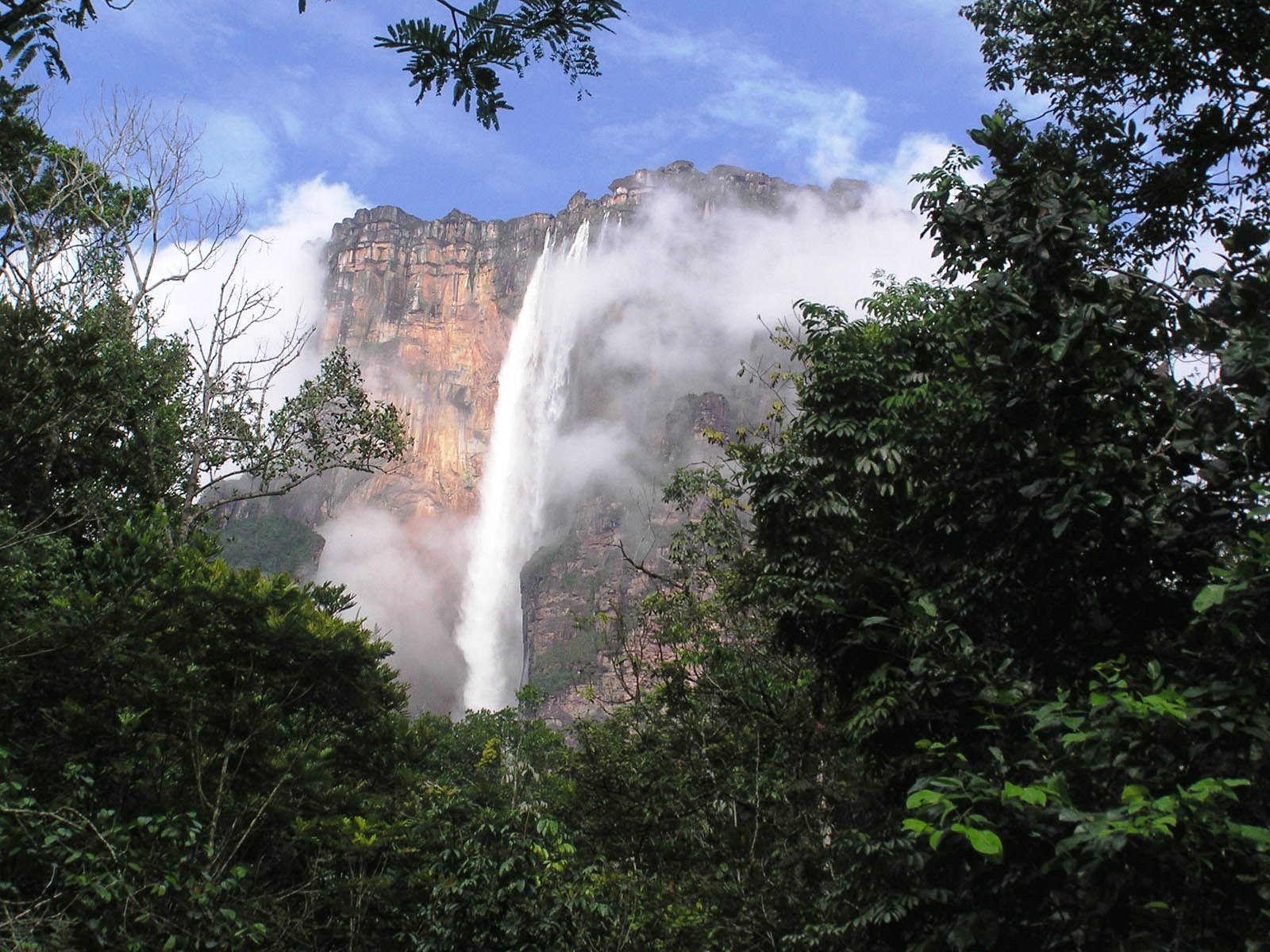
  1. File:Salto Angel from Raton.JPG

    Learn something new everyday, i thought i heard everything about KM88, now this is a new jewel. This was at least a well researched article.

    there we have it, las cristinas is cursed. stolen from the old widow and cursed on her death bed forever and ever.

    the Las Cristinas property on Venezuela's fabled kilometre 88, thought to be Latin America's biggest gold deposit, and currently controlled by Canada's Crystallex. This has proved to be an ill-fated gold deposit and should probably one-day be the subject of a major novel or feature film. Crystallex itself inherited the project in controversial circumstances, but prior to that the history is intriguing.

    Apparently the concession was given to the co-pilot of the plane which discovered the Angel Falls by a grateful Venezuelan government in the 1930s. In the 1980s the pilot's widow, Dot Lemon, who lived in the U.S. was almost certainly swindled out of her inheritance in some sharp legal and financial practices and some believe she cursed the mine's future owners on her deathbed as virtually every company involved with it since has run into huge financial, political or legal difficulties over it ever since.

    more on angel falls here.. http://en.wikipedia.org/wiki/Angel_Falls

    They were not known to the outside world until American aviator Jimmie Angel[3] flew over them on 16 November 1933 on a flight while he was searching for a valuable ore bed.

    Returning on October 9 1937, Angel tried to land his Flamingo monoplane "El Rio Caroni" atop Auyan-tepui, but the plane was damaged when the wheels sunk into the marshy ground, and he and his three companions, including his wife Marie, were forced to descend the tepui on foot. It took them 11 days to make their way back to civilization, but news of their adventure spread, and the waterfall was named "Angel Falls" in his honor.

    Angel's plane

    Angel's plane remained on top of the tepuy for 33 years before being lifted out by helicopter. It was restored at the Aviation Museum in Maracay and now sits outdoors on the front of the airport at Ciudad Bolívar.

    repair7