Skip to content
Sign in

Post

e.Digital

You’re reading crazybill’s reply in this thread.Jump to it

VEEP3.0 rating from 163 members57.7K ptsRate

Gee, What a Concept...

Apple to Samsung: Stop stealing ideas

By Brian X. Chen, WIRED
April 19, 2011 7:45 a.m. EDT | Filed under: Innovation
"It's no coincidence that Samsung's latest products look a lot like the iPhone and iPad," an Apple rep said in a statement.
STORY HIGHLIGHTS
  • Apple says it's sick and tired of Samsung ripping off the iPad and iPhone
  • Lawsuit accuses Samsung of committing patent and trademark infringement
  • "This kind of blatant copying is wrong," Apple rep says in statement

(WIRED) -- Apple says it's sick and tired of Samsung ripping off the iPad and iPhone, and the Cupertino, California, company is filing papers.

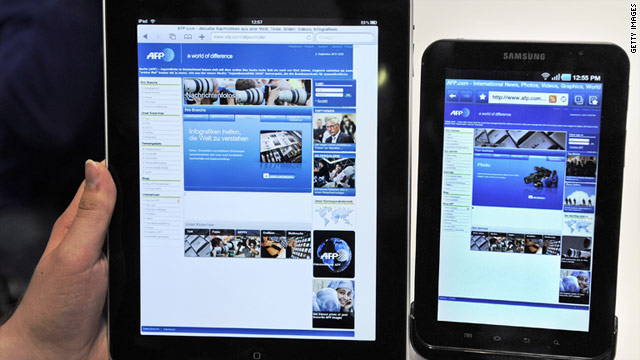
In a lawsuit filed Friday, Apple accused Samsung of committing patent and trademark infringement with its Galaxy line of mobile products. That includes the Galaxy S smartphone and the Galaxy Tab tablet.

"It's no coincidence that Samsung's latest products look a lot like the iPhone and iPad, from the shape of the hardware to the user interface and even the packaging," an Apple representative said in a statement provided to All Things Digital. "This kind of blatant copying is wrong, and we need to protect Apple's intellectual property when companies steal our ideas."

Samsung is also a supplier of components to Apple, and manufactures at least some of the A4 and A5 processors used inside the iPhone, iPad and Apple TV, as well as solid-state disk drives used in many Apple products.

Tech giants are already tangled in a number of patent lawsuits filed in years past related to smartphones.

Nokia filed suit against Apple in 2009 for patent infringement, Apple filed a patent lawsuit against HTC in 2010, and Microsoft has gone after Google's partners offering Android-powered products.

In the suit filed against Samsung, Apple contends that Samsung is copying Apple's products on both the hardware and software levels.

For instance, Apple says the Galaxy Tab "slavishly copies" Apple's product design, using a rectangular body with rounded corners, a black border and an array of app icons similar to the iPad's.

Apple also names the Galaxy S, Epic 4G and the Nexus S smartphones, according to a brief report in The Wall Street Journal. The lawsuit filing has yet to appear in the official PACER database.

Wired.com noted last year that the Samsung Vibrant, the predecessor of the Galaxy S, strongly resembles the iPhone.

Join the conversation about e.Digital.

Reply

Replies

    1. Efficient Infringement and Patent Theft as a Business Strategy

      April 6, 2010 by admin

      America’s largest big tech corporations are now using a business technique called “efficient infringement,” which means that they calculate the benefits of stealing someone else’s patented technology against the possibility of getting caught, tried in court and being forced to pay damages and penalties. If the benefits exceed the costs, they steal.

      What makes patent theft so attractive is that infringement is not a criminal act and those found guilty face no jail time. Paying up is the worst that can happen to the infringer.

      The most aggressive users of this business model are fifteen of America’s largest big tech corporations. Led by Cisco, Intel, IBM, Microsoft and HP, these giants have spent millions of lobbying dollars over the past five years trying to buy legislation in Washington that would weaken the existing U.S. laws on patent infringement. Their interest is obvious since in the 13 years between 1996 and 2008, patent owners have sued these fifteen corporations 740 times for infringement and have won $4 billion in damages. Not surprisingly, these big tech corporations’ political goal is to change the law so patent theft is more difficult to prove, less costly when caught, and willful infringement virtually impossible to prove.

      The principal victims of these big corporations’ “efficient infringement” approach are America’s independent inventors, small businesses and universities – the source of most breakthrough innovations and the creators of two-thirds of all new jobs in America.

      This “steal-what-you-want” approach to business is spreading throughout our economy. Now, corporate behemoths in the financial services industry are using the technique and ganging up on small patent holders. Nowhere is this more evident than the case of DataTreasury Corporation, a tiny Texas company locked in battle with some of the biggest banks in the world.

      As I have written before, DataTreasury’s founder invented a revolutionary check-processing system in the mid-1990s and tried to market it to high-level executives at Chase Manhattan Bank (now known as JPMorgan Chase). Instead of partnering with DataTreasury, those bankers are accused of walking off with the idea and using it to start a pair of highly successful check-processing companies of their own — companies which are now owned by the biggest banks in the nation.

      According to industry sources, the banking industry is now making $2-4 billion annually because of DataTreasury’s patented check-processing technology. DataTreasury has been forced to go to court to protect its property rights, and over the years has reached settlements with JPMorgan Chase, Citibank, HSBC, and scores of other large banks.

      But Bank of America, Wells Fargo, and about a dozen other banks refuse to deal with the little company. Instead of paying up, those remaining banks have played dirty. In 2007, Washington lobbyists working for the banking industry had an amendment inserted into a pending patent-reform bill that would have granted legal immunity to all of DataTreasury’s defendants. The amendment died on the floor of the U.S. Senate after the press exposed the story.

      1. Good find sman998

        'What makes patent theft so attractive is that infringement is not a criminal act and those found guilty face no jail time. Paying up is the worst that can happen to the infringer.'

        Seems to me, if the Supreme court wants to give priveleges of citizenship to companies, they should also be held responsible for their theft mis-deeds. Theft is theft.