The United States government has demanded that Apple take an unprecedented step which threatens the security of our customers. We oppose this order, which has implications far beyond the legal case at hand.
This moment calls for public discussion, and we want our customers and people around the country to understand what is at stake.
The Need for Encryption
Smartphones, led by iPhone, have become an essential part of our lives. People use them to store an incredible amount of personal information, from our private conversations to our photos, our music, our notes, our calendars and contacts, our financial information and health data, even where we have been and where we are going.
All that information needs to be protected from hackers and criminals who want to access it, steal it, and use it without our knowledge or permission. Customers expect Apple and other technology companies to do everything in our power to protect their personal information, and at Apple we are deeply committed to safeguarding their data.
Compromising the security of our personal information can ultimately put our personal safety at risk. That is why encryption has become so important to all of us.
For many years, we have used encryption to protect our customers’ personal data because we believe it’s the only way to keep their information safe. We have even put that data out of our own reach, because we believe the contents of your iPhone are none of our business.
The San Bernardino Case
We were shocked and outraged by the deadly act of terrorism in San Bernardino last December. We mourn the loss of life and want justice for all those whose lives were affected. The FBI asked us for help in the days following the attack, and we have worked hard to support the government’s efforts to solve this horrible crime. We have no sympathy for terrorists.
When the FBI has requested data that’s in our possession, we have provided it. Apple complies with valid subpoenas and search warrants, as we have in the San Bernardino case. We have also made Apple engineers available to advise the FBI, and we’ve offered our best ideas on a number of investigative options at their disposal.
We have great respect for the professionals at the FBI, and we believe their intentions are good. Up to this point, we have done everything that is both within our power and within the law to help them. But now the U.S. government has asked us for something we simply do not have, and something we consider too dangerous to create. They have asked us to build a backdoor to the iPhone.
Specifically, the FBI wants us to make a new version of the iPhone operating system, circumventing several important security features, and install it on an iPhone recovered during the investigation. In the wrong hands, this software — which does not exist today — would have the potential to unlock any iPhone in someone’s physical possession.
The FBI may use different words to describe this tool, but make no mistake: Building a version of iOS that bypasses security in this way would undeniably create a backdoor. And while the government may argue that its use would be limited to this case, there is no way to guarantee such control.
The Threat to Data Security
Some would argue that building a backdoor for just one iPhone is a simple, clean-cut solution. But it ignores both the basics of digital security and the significance of what the government is demanding in this case.
In today’s digital world, the “key” to an encrypted system is a piece of information that unlocks the data, and it is only as secure as the protections around it. Once the information is known, or a way to bypass the code is revealed, the encryption can be defeated by anyone with that knowledge.
The government suggests this tool could only be used once, on one phone. But that’s simply not true. Once created, the technique could be used over and over again, on any number of devices. In the physical world, it would be the equivalent of a master key, capable of opening hundreds of millions of locks — from restaurants and banks to stores and homes. No reasonable person would find that acceptable.
The government is asking Apple to hack our own users and undermine decades of security advancements that protect our customers — including tens of millions of American citizens — from sophisticated hackers and cybercriminals. The same engineers who built strong encryption into the iPhone to protect our users would, ironically, be ordered to weaken those protections and make our users less safe.
We can find no precedent for an American company being forced to expose its customers to a greater risk of attack. For years, cryptologists and national security experts have been warning against weakening encryption. Doing so would hurt only the well-meaning and law-abiding citizens who rely on companies like Apple to protect their data. Criminals and bad actors will still encrypt, using tools that are readily available to them.
A Dangerous Precedent
Rather than asking for legislative action through Congress, the FBI is proposing an unprecedented use of the All Writs Act of 1789 to justify an expansion of its authority.
The government would have us remove security features and add new capabilities to the operating system, allowing a passcode to be input electronically. This would make it easier to unlock an iPhone by “brute force,” trying thousands or millions of combinations with the speed of a modern computer.
The implications of the government’s demands are chilling. If the government can use the All Writs Act to make it easier to unlock your iPhone, it would have the power to reach into anyone’s device to capture their data. The government could extend this breach of privacy and demand that Apple build surveillance software to intercept your messages, access your health records or financial data, track your location, or even access your phone’s microphone or camera without your knowledge.
Opposing this order is not something we take lightly. We feel we must speak up in the face of what we see as an overreach by the U.S. government.
We are challenging the FBI’s demands with the deepest respect for American democracy and a love of our country. We believe it would be in the best interest of everyone to step back and consider the implications.
While we believe the FBI’s intentions are good, it would be wrong for the government to force us to build a backdoor into our products. And ultimately, we fear that this demand would undermine the very freedoms and liberty our government is meant to protect.
Plank... this is the part that got my attention....scary.
Rather than asking for legislative action through Congress, the FBI is proposing an unprecedented use of the All Writs Act of 1789 to justify an expansion of its authority.
The government would have us remove security features and add new capabilities to the operating system, allowing a passcode to be input electronically. This would make it easier to unlock an iPhone by “brute force,” trying thousands or millions of combinations with the speed of a modern computer.
The implications of the government’s demands are chilling. If the government can use the All Writs Act to make it easier to unlock your iPhone, it would have the power to reach into anyone’s device to capture their data. The government could extend this breach of privacy and demand that Apple build surveillance software to intercept your messages, access your health records or financial data, track your location, or even access your phone’s microphone or camera without your knowledge.
Opposing this order is not something we take lightly. We feel we must speak up in the face of what we see as an overreach by the U.S. government.
We are challenging the FBI’s demands with the deepest respect for American democracy and a love of our country. We believe it would be in the best interest of everyone to step back and consider the implications.
While we believe the FBI’s intentions are good, it would be wrong for the government to force us to build a backdoor into our products. And ultimately, we fear that this demand would undermine the very freedoms and liberty our government is meant to protect.
Yet the all mighty Apple steals patents going in the front door, makes billions each month from the IP owned by others, thinks nothing of it, then muscles their way thru court, pays a fee eventually, then goes about the business of being a scum bag patent theif again and again, with zero shame.
When the victims sue them for this unethical standard practice, basher board types call them patent trolls.
Birds of a feather post together, but they ain't here.
SAN FRANCISCO, CA - The new Apple iPhone 6 and 6s are seen in the demo area after an Apple special event at Bill Graham Civic Auditorium September 9, 2015 in San Francisco, California. Apple Inc. unveiled latest iterations of its smart phone, forecasted to be the 6S and 6S Plus and announced an update to its Apple TV set-top box. (Photo by The Asahi Shimbun via Getty Images)(Photo : The Asahi Shimbun via Getty Images)
Apple is once again facing a patent infringement suit. Immersion has filed a series of complaints against Apple for allegedly stealing their patents related to the 3D Touch and Force Touch technology which are being used on Apple devices.
According to the press release, the haptic technology company is suing Apple and AT&T for infringing on their three patents with ties to haptic feedback.
Immersion asserts that various iPhone products such as iPhone 6, 6 Plus, 6S, 6S Plus and Apple Watch used their patented tech for their touch systems.
Immersion’s claim, according to GSM Arena, revolved around three patents including: “Haptic feedback system with stored effects”, “Method and Apparatus for Providing Tactile Sensations” and “Interactivity Model for Shared Feedback on Mobile Devices”.
"While we are pleased to see others in the industry recognize the value of haptics and adopt it in their products, it is important for us to protect our business against infringement of our intellectual property in order to preserve the ecosystem we have built and the investments that we have made in continuing to advance haptic experiences,” Immersion CEO Victor Viegas said, as per Mashable.
He adds that they will “vigorously” fight for the intellectual property they have developed when it is stolen.
This isn’t the first time Immersion is suing for their patents. In the past, the company has filed complaints against other tech companies including Sony, Google, Microsoft and HTC. They won the case against Sony, Google and Microsoft.
Apple is also under legal threat for a class-action lawsuit for “Error 53” which has been a headache for iPhone 6 users. Another case is about the iOS 9, which according to users have slowed down their iPhone 4 models.
No word yet from Apple about this latest charge from Immersion.
Gurindar Sohi and Terani Vijaykumar might have been names that would've gotten lost in history, until this happened. The two engineers of Indian origin, who were a part of a team of four inventors, just won a case against the tech giant, Apple Inc. for using their patent technology in the processors of their devices without their permission. The lawsuit was brought into light by the Wisconsin Alumni Research Foundation (WARF), which is the licensing department of the University of Wisconsin, in January 2014 when it filed a complaint against Apple Inc. for using their patent without their consent to "enhance efficiency and performance" of their signature products.
gizmobic.com
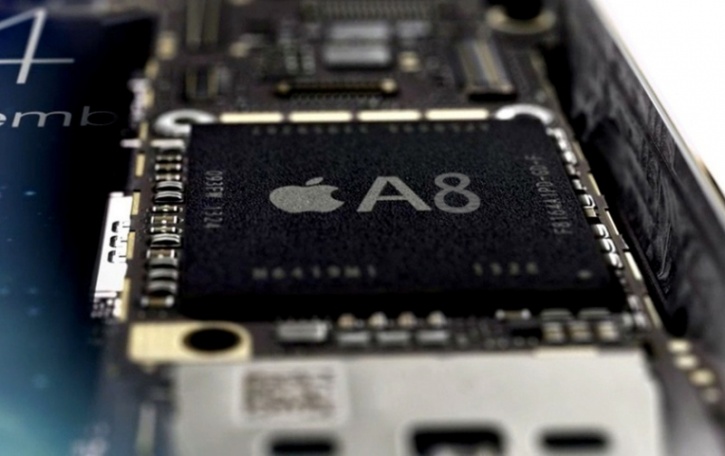
The four engineers (including Gurinder and Terani) played an instrumental role in coming up with a technology known as ‘Table-based Data Speculation Circuit for Parallel Processing Computer’, which enhances the processing powers of a device. Apple Inc. used this technology, which was patented by the WARF in 1998, in powering their A7, A8, and A8X processing chips. These chips were used in Apple's flagship products like the iPhone 5s, iPhone 6, and the recently released iPhone 6s. The case will proceed in 3 phases, namely, liability, damages, and willful infringement. Although the jury is yet to decide on the sum that needs to be awarded to the University, and the two Indians in question, the university has asked for remuneration in the region of $862.4 million in damages.
imagazin.hu
Apple has already been directed by the court of law to cough up around $400 million in the damages phase. But, if found guilty, they are likely to be slapped with another $400 million. Apple responded to these claims by saying that the patent was invalid, and that there was no copyright infringement. The India-born engineers moved to the US after completing their graduation from Birla Institute of Technology and Science in Pilani (Rajasthan).
Tim Cook with marketing GOLD - Our product is unhackable, we do it for you - the people, and we can't give Big Brother the tools to invade your privacy. With our engineering genius, we may be able to write code to overcome our infallible encryption, because quite honestly there is no key that can be used to unlock the data, but, we can't trust the government with the access, because it could expose the Earth and all those who trust and rely upon Apple to always do the right thing and take their back, to those criminals who we fight to the death daily. Again we have spent our youth, quality time, holidays, and what would have been precious life moments developing encryption for YOUR safety, health and well being, and we aren't about to let FBI come in here and take it from you.
Aliso Viejo, Calif.-based WiSilica, wisilica.com, a provider of smart environment solutions for the IoT (Internet of Things), announced that it has partnered with China’s TCL Tonly, www.tonlyele.com, a vertically-integrated manufacturing services provider.
WiSilica says this partnership will accelerate the deployment of its WiSe Connect IoT platform for smart home, security, and healthcare applications. The partnership will also position the company for growth.
The combination of TCL Tonly’s manufacturing services and WiSilica’s wireless mesh and cloud technology provides OEMs (original-equipment manufacturers) with a platform for Bluetooth low-power IoT and smart home products and applications.
WiSilica designed the partnership to enable connected smart home products and applications across TCL Tonly’s smart home and consumer electronics portfolio.
With the surge of connected products for the smart home, this is one example of a recent partnership that will continue to push the space forward.
The WiSilica platform works with both legacy devices and new products designed for the IoT, and sets new benchmarks for IoT success in areas including real-time presence and awareness, secure connectivity, data analytics opportunities, cost savings, and higher-quality user experiences. The platform makes it easy to bring together infrastructure, sensors, devices and people into a single unified, smart environment based on a Wi-Fi and Bluetooth low-energy (BLE)-based mesh-networking platform.
Key Features and Benefits Key features and benefits of the WiSilica platform include:
Behavioral and contextual intelligence delivered through significant improvements in real-time presence and awareness: Devices can be configured to act on events initiated by other devices, enhancing operational efficiency while improving the user experience. Real-time presence and awareness are increased through a combination of cloud-based services and software agents running across devices, gateways and applications, ensuring that smart environments can understand user needs in real-time and identify, predict and synchronize services, rather than requiring all device prompts and triggers to be configured in advance.
Anytime, anywhere access: leverages the existing smartphone ecosystem along with BLE protocols and mesh networking so users can manage and operate devices remotely using mobile apps and the cloud.
Decentralized control: Enables phones to communicate directly with devices, eliminating the need for a bridge to support autonomously operating applications.
End-to-end solution based on an open platform: Provides all necessary building blocks and framework to bring together infrastructure, sensors, devices and people into a single, flexible and intelligent system.
Scalability: The platform's high-performance software fabric is easily scalable to support millions of Bluetooth devices, users and bridges.
Secure connectivity: Delivers enterprise-level security through 128-bit encryption, authentication and role-based access control, to meet the most demanding requirements including such mission-critical applications as energy and healthcare services and critical infrastructure.
Over-the-air updates: All device firmware updates are conveniently executed over the air.
Big data analytics: Enables users to collect terabytes of valuable, actionable, high-definition data.
Availability The WiSilica platform is available now and currently shipping to customers. The platform can be used in a wide variety of healthcare, manufacturing, energy management, building automation, retail, infrastructure/environmental monitoring and other applications, as well as smart environments for the home, office and other facilities. More information about the WiSilica platform and development tools may be found at http://wisilica.com/developers.html